
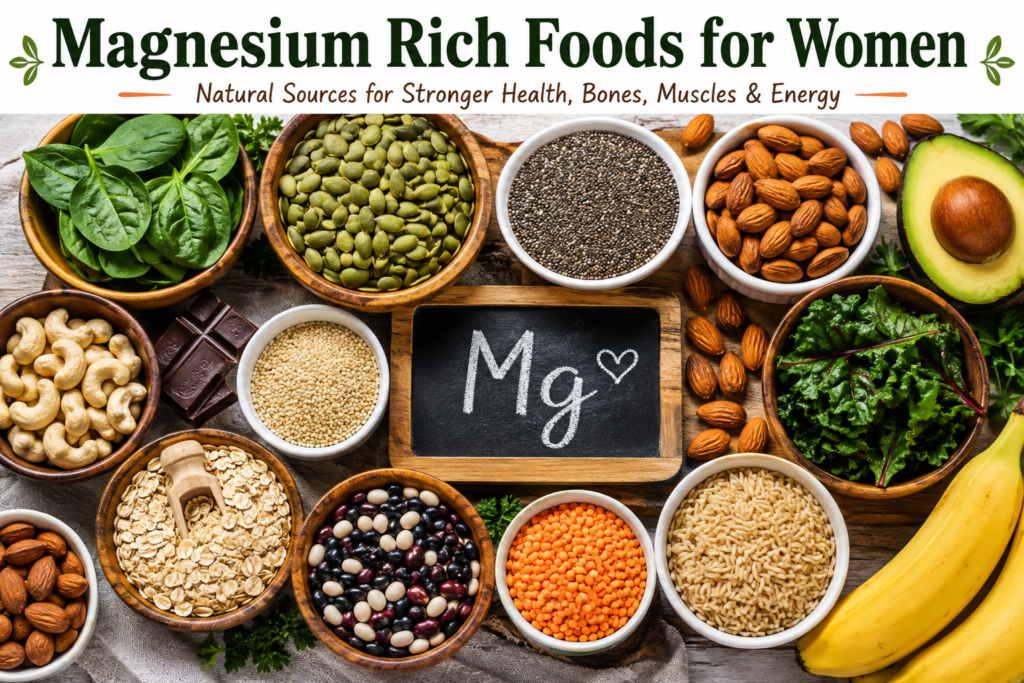
Magnesium-Rich Foods for Women
Magnesium-rich foods are an important part of healthy eating. Magnesium is an essential mineral that plays a role in hundreds of processes in the body, including normal muscle and nerve function, energy production, blood glucose regulation, and bone health.
If your diet is low in magnesium, your overall diet may not be well balanced. However, this does not mean that tiredness, joint pain, or poor sleep are always caused by low magnesium. These symptoms can have many other causes.
In this guide, we will cover magnesium-rich foods for women, the best magnesium foods, magnesium benefits for women, daily magnesium needs, possible signs of magnesium deficiency, plant-based sources, and easy meal ideas in simple language.
What Is Magnesium?
Magnesium is a mineral that the body needs for many normal functions. The body does not make magnesium on its own, so we get it mainly from food and, when needed, supplements.
Magnesium has several important roles in the body, including:
- Normal muscle function
- Normal nerve function
- Energy production
- Protein production
- Blood glucose regulation
- Normal blood pressure regulation
- Bone health
That is why including magnesium-rich foods in a balanced diet can be helpful.
Why Is Magnesium Important for Women?
Magnesium is not only important for women. It is an essential mineral needed for normal body functions in everyone.
Getting enough magnesium can:
- Support normal muscle function
- Support the nervous system
- Help with energy metabolism
- Support healthy bones
- Play a role in normal blood glucose regulation
- Support protein production
Remember: A healthy diet should not depend on just one mineral or nutrient. A balanced diet with a variety of fruits, vegetables, whole grains, protein foods, healthy fats, and other important nutrients is a better approach for overall health.
How Much Magnesium Do Women Need?
The recommended amount of magnesium can change depending on age and life stage.
For adult women:
- 19–30 years: 310 mg per day
- 31 years and older: 320 mg per day
During pregnancy and breastfeeding, magnesium needs may be different.
Getting magnesium from food is usually the preferred approach. If you think you need a supplement, it is better to ask a healthcare professional for advice.
Best Magnesium-Rich Foods for Women
Now let’s look at some of the best foods that contain magnesium.
1. Pumpkin Seeds 🎃
Pumpkin seeds are an excellent source of magnesium.
You can add them to:
- Oatmeal
- Yogurt
- Salads
- Smoothie bowls
Sprinkling a small amount over your meals is an easy way to add more magnesium to your diet.
2. Chia Seeds 🌱
Chia seeds are also a good magnesium-rich food.
You can add them to:
- Yogurt
- Oatmeal
- Homemade pudding
- Smoothies
Chia seeds also provide fiber, making them a useful part of a balanced diet.
3. Almonds 🌰
Almonds are an easy magnesium-rich snack.
You can eat unsalted almonds as a snack or add them to oatmeal and yogurt.
Nuts are high in calories, so it is better to eat a normal serving as part of your meal plan.
4. Cashews
Cashews are another useful source of magnesium.
You can add them to snacks, salads, or homemade meals.
Choosing unsalted cashews can help you manage your salt intake.
5. Peanuts 🥜
Peanuts are affordable and easy to find. They also provide magnesium.
You can have peanuts as a snack or use peanut butter in:
- Oatmeal
- Toast
- Homemade snacks
Choose simple products with less added sugar and salt when possible.
6. Spinach and Leafy Greens 🥬
Leafy green vegetables, such as spinach, can provide magnesium.
You can add spinach to:
- Omelets
- Soups
- Curries
- Salads
- Sandwiches
Eating vegetables regularly is also important for overall nutrition.
7. Black Beans
Beans are affordable and useful sources of magnesium.
You can use black beans and other beans in:
- Rice bowls
- Salads
- Soups
- Wraps
- Homemade curries
8. Lentils
Lentils, including masoor dal, can be a nutritious part of a balanced diet.
They provide magnesium as well as protein and fiber.
A simple dal with vegetables and whole grains can make an easy and healthy meal.
9. Whole Grains 🌾
Whole grains can also provide magnesium.
Examples include:
- Oats
- Brown rice
- Whole-grain bread
- Whole-grain cereals
Choosing whole grains regularly instead of refined grains can improve the overall quality of your diet.
10. Avocado 🥑
Avocado provides magnesium and also contains healthy fats.
You can add it to:
- Whole-grain toast
- Salads
- Sandwiches
- Homemade bowls
11. Dark Chocolate 🍫
Dark chocolate with a higher cocoa content can be a source of magnesium.
However, chocolate can also contain added sugar and calories, so a small portion is a better choice.
12. Tofu
Tofu can be a useful source of magnesium, especially for people following a plant-based diet.
You can use it with vegetables in stir-fries, curries, or rice bowls.
Magnesium-Rich Foods List
Here is a quick list:
- Pumpkin seeds
- Chia seeds
- Almonds
- Cashews
- Peanuts
- Spinach
- Black beans
- Lentils
- Oats
- Brown rice
- Whole-grain bread
- Avocado
- Dark chocolate
- Tofu
These foods provide magnesium along with other useful nutrients.
Magnesium-Rich Foods for Vegetarians
Women following a vegetarian diet have many plant-based magnesium options.
Good choices include:
- Pumpkin seeds
- Chia seeds
- Almonds
- Cashews
- Peanuts
- Lentils
- Beans
- Spinach
- Oats
- Whole grains
- Tofu
- Avocado
You do not need to eat meat to get magnesium.
Magnesium-Rich Foods for Vegans
Good vegan sources of magnesium include seeds, nuts, beans, leafy greens, whole grains, and tofu.
A simple vegan meal could be:
Oats + chia seeds + almonds + fruit
Another option is:
Lentils + brown rice + spinach + vegetables
These combinations can provide a variety of nutrients.
Magnesium Foods for Breakfast 🍳
Adding magnesium to breakfast can be very easy.
Idea 1: Magnesium Oatmeal
Oats + chia seeds + almonds + banana
Idea 2: Healthy Toast
Whole-grain toast + avocado + egg
Idea 3: Yogurt Bowl
Yogurt + chia seeds + almonds + fruit
Idea 4: Simple Smoothie
Milk or fortified plant-based milk + banana + spinach + chia seeds
For a balanced breakfast, it is also useful to include protein, fiber, and healthy fats.
Magnesium-Rich Foods for Lunch 🥗
Lentil Bowl
Lentils + brown rice + spinach + vegetables
Bean Salad
Beans + leafy greens + vegetables + whole-grain bread
Tofu Bowl
Tofu + brown rice + spinach + mixed vegetables
These meals can provide magnesium along with protein and fiber.
Magnesium-Rich Foods for Dinner 🍲
Simple dinner combinations include:
- Lentil curry + brown rice + spinach
- Beans + whole-grain roti + vegetables
- Tofu + vegetables + brown rice
- Grilled fish + leafy greens + whole grains
You can change these combinations according to the foods available in your area.
Magnesium-Rich Snacks 🥜
If you want magnesium-rich snacks, try:
- A small serving of almonds
- Pumpkin seeds
- Chia seed yogurt
- Peanuts
- Whole-grain toast with nut butter
- Fruit with nuts
Even healthy snacks should be eaten in reasonable portions.
Magnesium Deficiency Symptoms
Symptoms of magnesium deficiency are more likely to appear when the deficiency is significant. However, symptoms alone cannot confirm a deficiency.
Possible symptoms include:
- Loss of appetite
- Nausea
- Vomiting
- Tiredness
- Weakness
- Muscle cramps or contractions
- Abnormal heart rhythm in severe cases
Severe magnesium deficiency can be serious.
If you have ongoing symptoms or think you may be at risk, talk to a healthcare professional.
Who May Be at Risk of Magnesium Deficiency?
The risk may be higher in people with certain conditions or situations, such as:
- Certain digestive disorders
- Problems with nutrient absorption
- Long-term alcohol use
- Certain medicines
- Some medical conditions
Having a risk factor does not mean that you definitely have a magnesium deficiency. Proper medical assessment is more reliable.
Magnesium and Women’s Health
Magnesium is important for overall health, but there are many exaggerated claims about magnesium online.
Magnesium should not be seen as:
- A guaranteed solution for hormone balance
- A quick weight-loss solution
- A guaranteed cure for stress
- A guaranteed treatment for sleep problems
A better approach is to include magnesium-rich foods as part of a balanced diet.
Magnesium and Bone Health 🦴
Magnesium plays an important role in bone health.
However, healthy bones need more than magnesium. Calcium, vitamin D, physical activity, and overall nutrition are also important.
So, it is better to think about magnesium and bone health as part of a complete healthy lifestyle.
Magnesium Supplements: Are They Necessary?
Most healthy people can get enough magnesium from food.
Magnesium supplements may be useful in some situations, but they are not necessary for everyone. If you think you need a supplement or have a medical condition, talk to a healthcare professional first.
Types of Magnesium Supplements
Different forms of magnesium supplements are available, including:
- Magnesium citrate
- Magnesium glycinate
- Magnesium oxide
- Magnesium chloride
Different forms may be absorbed differently and may also have different effects on digestion.
So, there is no single “best magnesium supplement” for everyone.
Can Magnesium Supplements Cause Side Effects?
High amounts of magnesium from supplements or medicines can cause:
- Diarrhea
- Nausea
- Stomach cramps
Magnesium naturally found in food is generally not a concern for healthy people.
If you develop digestive problems after taking a magnesium supplement, talk to a healthcare professional.
How to Get More Magnesium Naturally 🌿
Here are some simple steps:
Step 1: Add Seeds to Breakfast
Add chia seeds or pumpkin seeds to oatmeal or yogurt.
Step 2: Choose Better Snacks
Instead of highly processed snacks, try nuts or seeds.
Step 3: Eat Beans and Lentils Regularly
Dal and beans are affordable sources of magnesium.
Step 4: Add Leafy Greens
Include spinach and other leafy vegetables in your meals.
Step 5: Choose Whole Grains
Try oats, brown rice, and whole-grain bread instead of choosing refined grains all the time.
Common Mistakes ❌
Mistake 1: Depending Only on Supplements
Food should usually be the first source of magnesium.
Mistake 2: Thinking Every Muscle Cramp Means Magnesium Deficiency
Muscle cramps can have many possible causes.
Mistake 3: Taking High-Dose Magnesium
More magnesium is not always better. High amounts from supplements can cause side effects.
Mistake 4: Ignoring Medicine Interactions
Some medicines can interact with magnesium. If you take regular medicines, ask a healthcare professional before starting a supplement.
Final Thoughts 🌿
Magnesium-rich foods can be an important part of a healthy and balanced diet. Foods such as seeds, nuts, beans, lentils, leafy greens, whole grains, and tofu provide magnesium along with other useful nutrients.
Instead of depending only on supplements, a food-first approach is usually a practical choice. You can easily add magnesium-rich foods to your routine by having chia seeds or almonds at breakfast, lentils or beans at lunch, and leafy greens or whole grains at dinner.
If you have ongoing tiredness, weakness, muscle problems, or other concerning symptoms, do not automatically assume that you have a magnesium deficiency. These symptoms can have many different causes, so getting proper medical advice is a better approach.
The goal of healthy eating is not to focus on one mineral. A varied and balanced diet is more important for overall health.
Important Health Disclaimer
This article is for general health education only. It is not a replacement for diagnosis, treatment, or professional medical advice.
If you are concerned about magnesium deficiency, have a medical condition, are pregnant, or take regular medicines, talk to a qualified healthcare professional before starting magnesium supplements.
Vitamin B12 Deficiency Symptoms → Learn the early warning signs, common causes, risk factors, and ways to support healthy B12 levels.